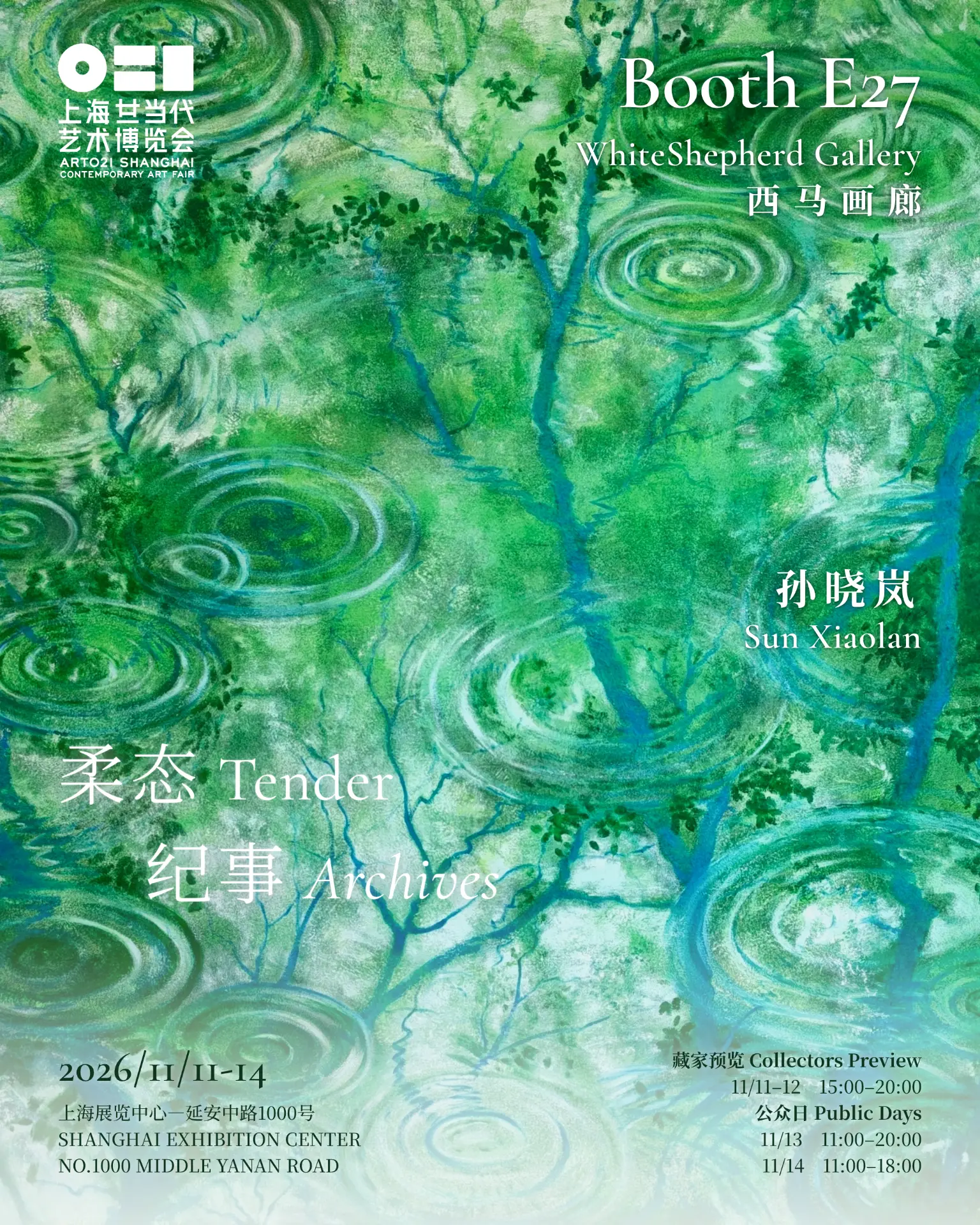
Tender Archives 柔态纪事 — ART021 SHANGHAI 2026
Art Fairs
11 – 14 November 2026
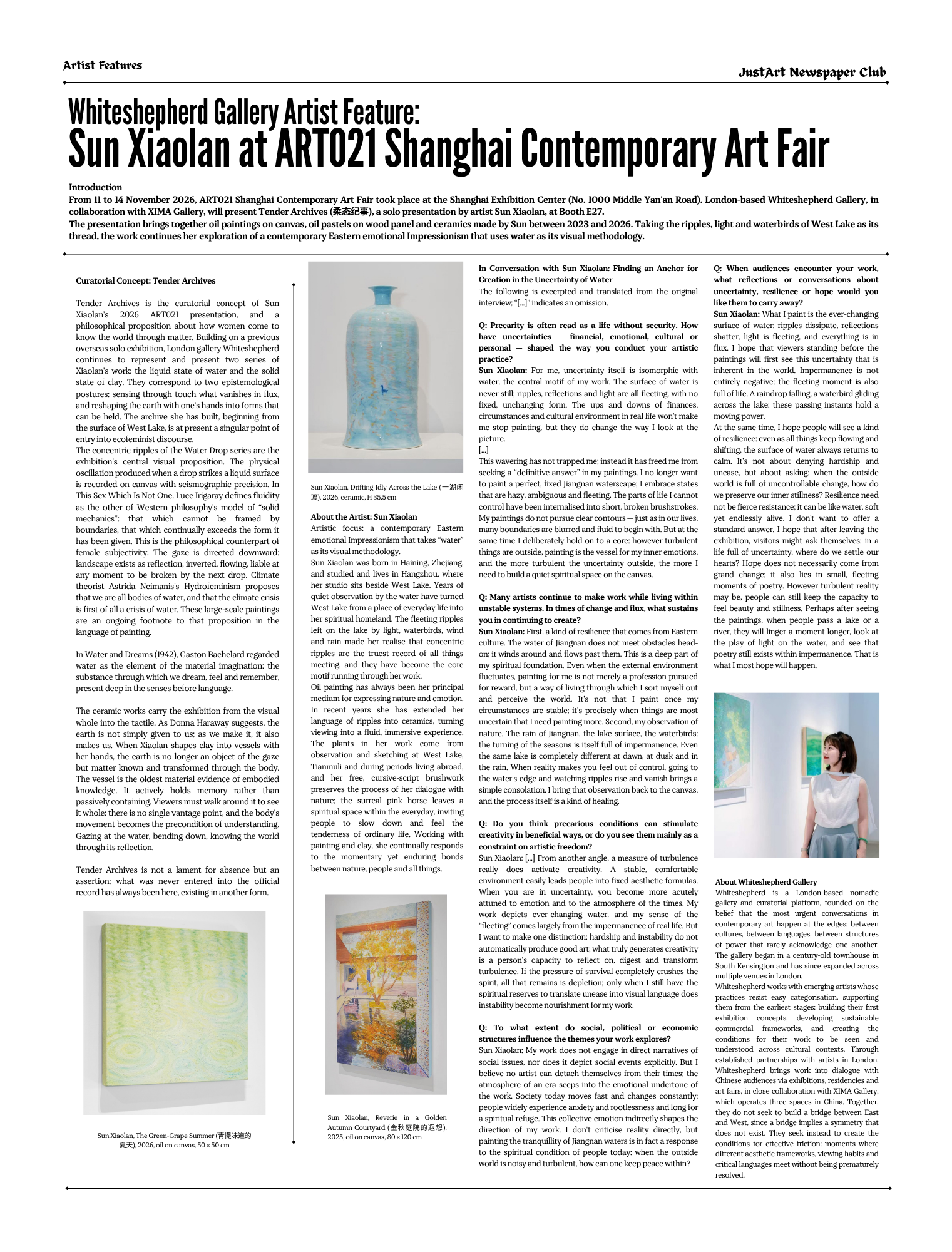
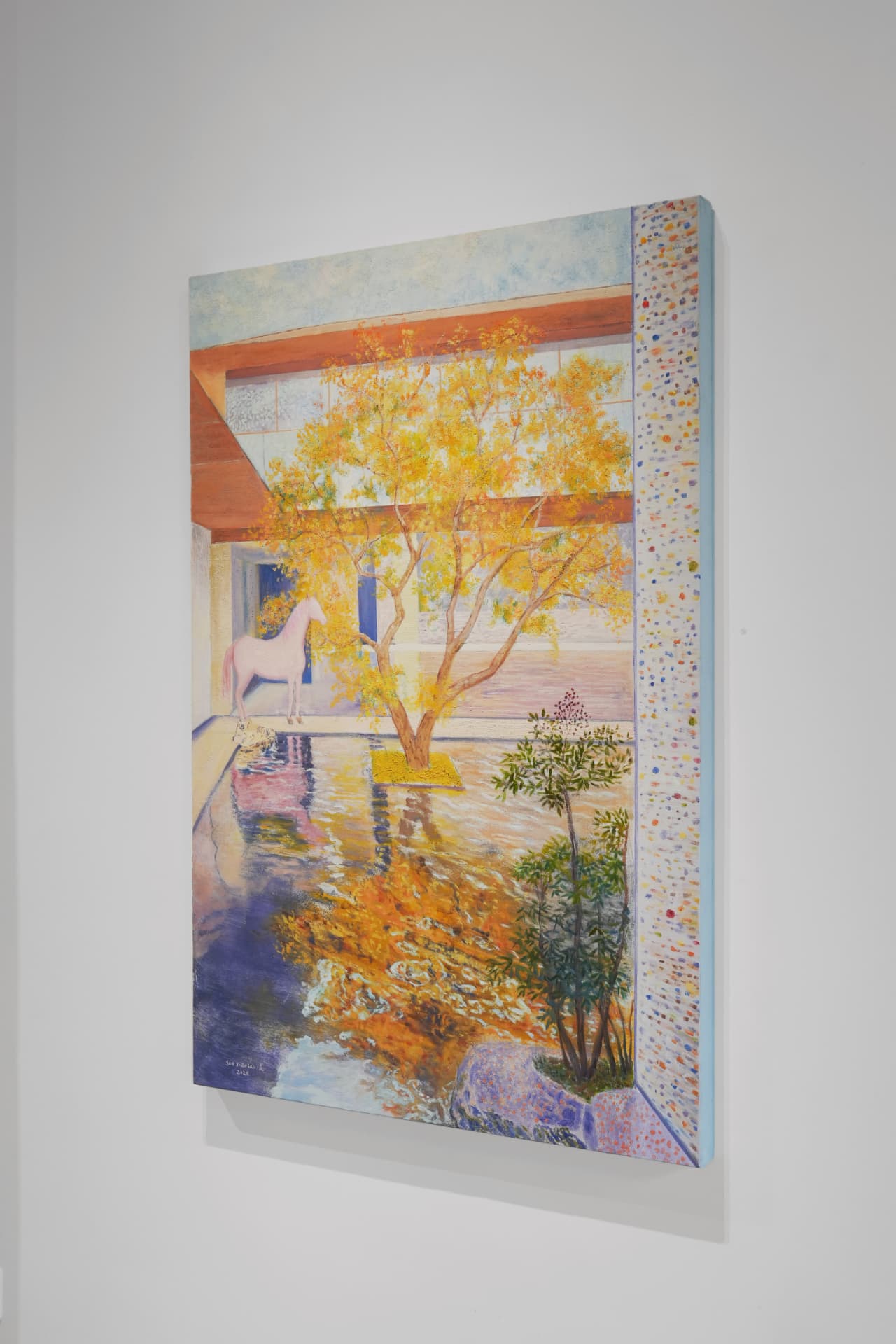
Tender Archives is the curatorial concept for Sun Xiaolan's presentation at ART021 2026, and a proposition about how women come to know the world through matter. Continuing their earlier collaboration abroad, WhiteShepherd Gallery presents three series: water in its liquid state, plants in a settled state, and clay in its solid state. Each corresponds to a way of knowing: sensing through touch what vanishes in flow, preserving women's knowledge of nature in the manner of a herbarium, and shaping the earth by hand into forms that can be held.
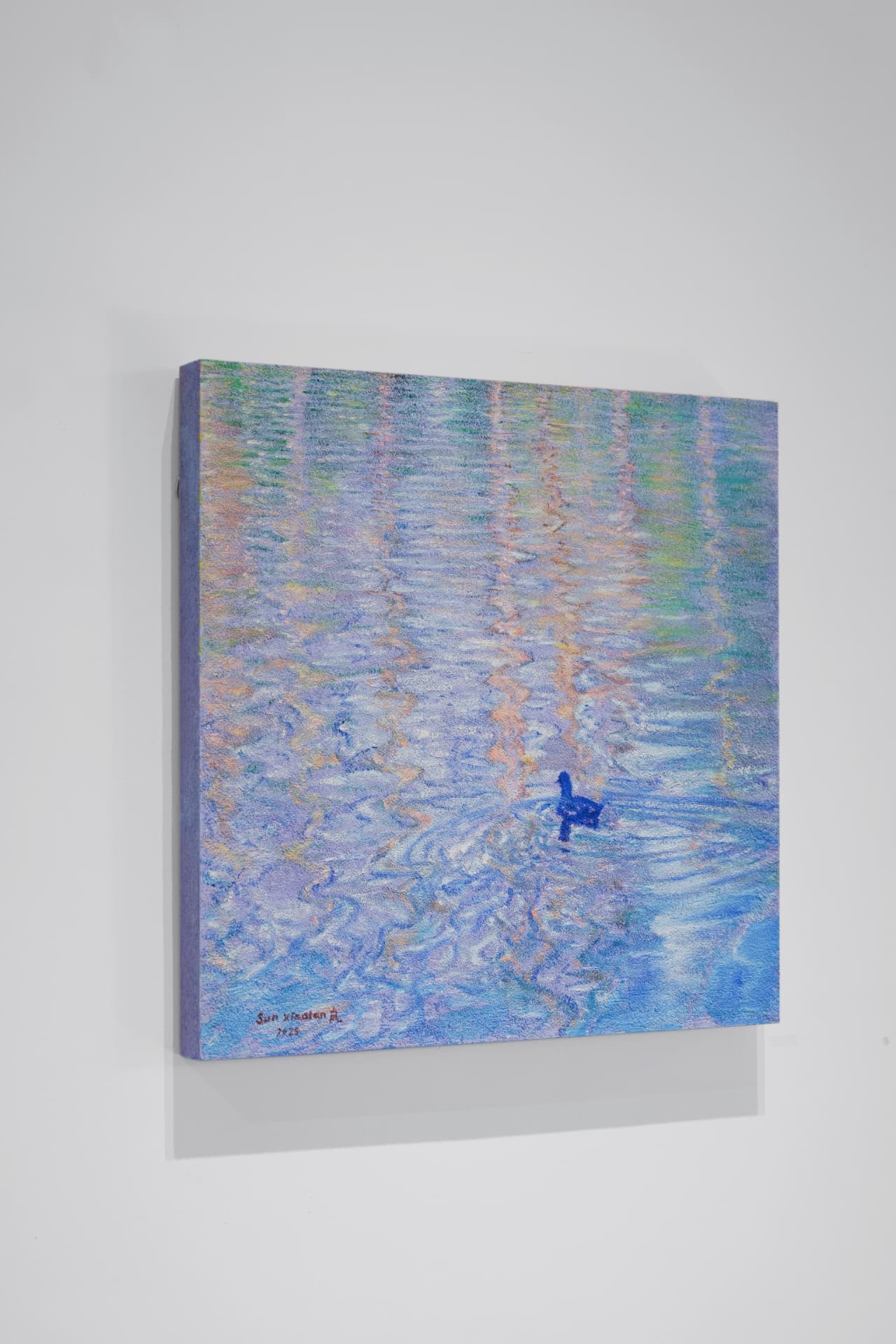
Concentric ripples are the exhibition's central image: the instant a drop touches the water is recorded on canvas with seismographic precision, and with the gaze turned downward, the landscape exists only as reflection. The plant series settles this fluid looking into knowledge that can be kept, while the ceramics carry the exhibition into touch: viewers must walk around them to see them whole.
Tender Archives is not a lament for absence, but an assertion: what has never been entered into the official record has always been here, existing in another form.
Artist Statement
I am a Chinese contemporary artist living and working in Hangzhou, Zhejiang. My practice is rooted in landscape oil painting, and in recent years I have moved steadily into cross-media work. Mixed materials such as oil paint and mineral pigments, and ceramic installation, are now at the centre of what I make.
West Lake is very close to my studio, and I have been there more times than I could ever count. But it is only in the past few years that I began to look at the water carefully. Not at the scenery on the lake, but at how light sits inside the water. I watched how, when a wild duck glides past, ripples spread outward ring by ring and then disappear. I realised that those circles are a record of contact itself. Something arrives from above, touches the surface, and leaves. The circles remain; the thing that fell is gone. Since then, concentric ripples have become the core language of my painting. What draws me to them is not that they are beautiful, but that they are honest. Every ring is evidence of a touch.
Looking down onto the water in this way has also let me see the aesthetics of traditional Chinese shanshui painting anew. Light scattered across ripples, plants along the shore, reflections drifting on the lake: I try to translate these fleeting moments into a contemporary language, and through them to explore tactile perception, ecological memory and feminist ways of knowing.
My paintings of plants come from years of walking and observing. By West Lake, around Tianmuli in Hangzhou, under the trees I pass while working in Paris and London, I take note of plants that are easily overlooked: a grass whose name I don't know, a small cluster of flowers that opens in autumn, a few leaves turned translucent against the light. As I paint them, I keep the cursive, calligraphic traces that the moving hand leaves behind.
Sometimes a pink horse appears among these observed scenes. A pink horse does not exist in reality. But beside the reflective surface of the water it has its own reflection, and it exists in another way. Gradually I came to feel that my paintings need a place like this, a place for things that cannot be classified by scientific record, so that they too can make an appearance. The horse is not a symbol, nor a fable. It is simply itself, a presence from somewhere else, standing beside its reflection on the water. It reminds me that gazing at water is not only an act of observation, but also of imagination.
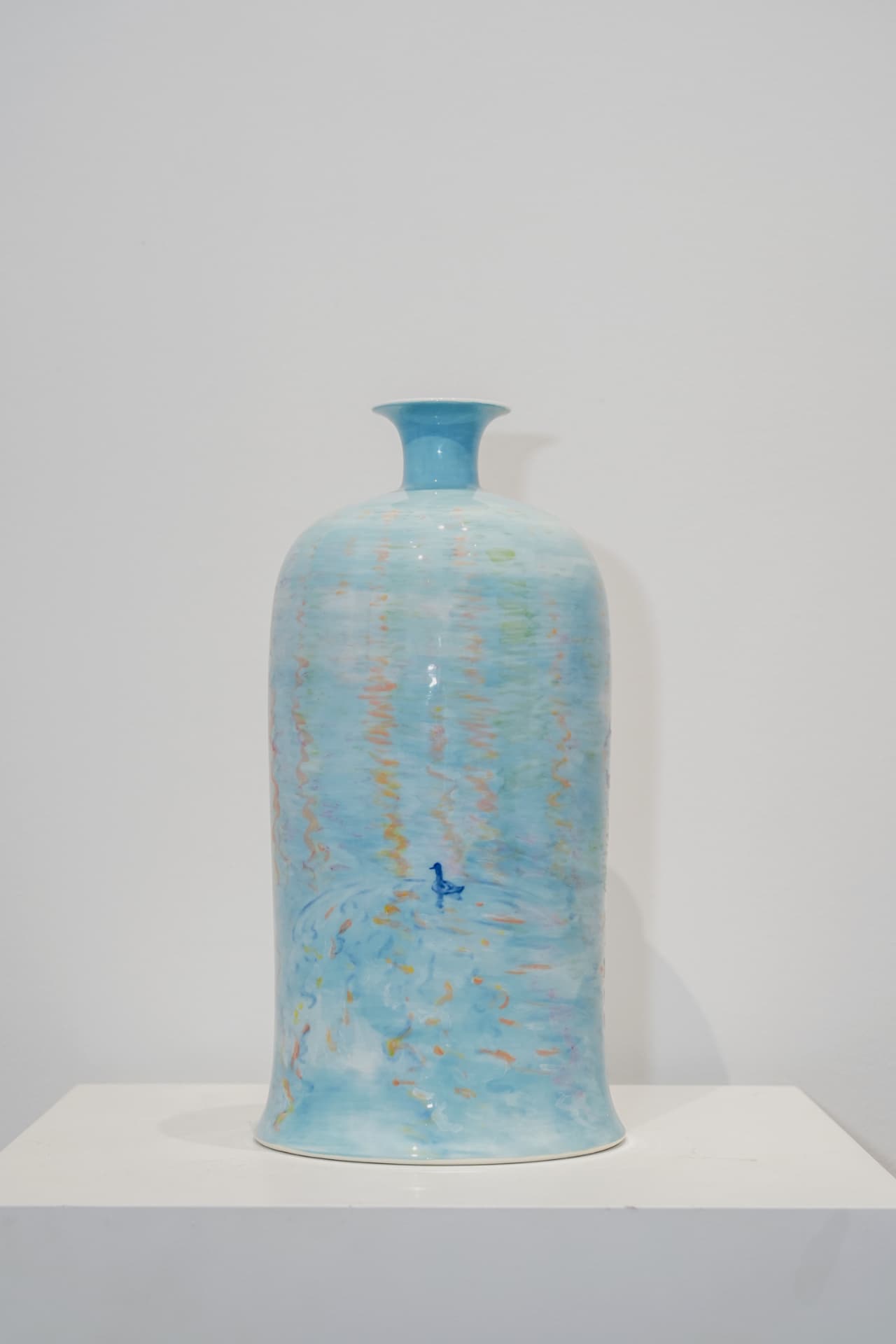
Ceramics are a new beginning of the past two years. Shaping clay is different from painting: an oil painting can be revised, but once a piece goes into the kiln it cannot. I love this irreversible element of chance. Shaping clay with my hands is a direct negotiation with the material, with no room to take anything back. I continue painting on the vessels, letting plants turn around the body of the form, so that anyone looking at the work has to walk around it to see it all. I want looking to be an action, not just a pause.
My work engages with the international conversations around ecofeminism and material feminism. In recent years I have begun to bring these bodies of work into larger exhibition contexts. In February 2024, at my solo exhibition Whispers of Mist, Mountain Winds at Galerie Francis Barlier in Paris, I showed recent works from the landscape and water series. In June 2026, my solo exhibition After the Mist Clears, the Water Remembers in London, co-presented by WhiteShepherd Gallery and D Contemporary, brought together twenty paintings from the past three years. Standing in the gallery in London and watching visitors from many different cultural backgrounds pause before those reflections from West Lake, I felt a kind of confirmation: what happens on these water surfaces deserves to be seen, and can be seen.
ART021 is the first time all three series are shown together in Shanghai's contemporary art context: the ripple paintings, the botanical landscapes, and the ceramic installations. They share a single point of departure, the reflections on contact, recording and shaping that have gathered over years of one person gazing at the surface of water. I don't know what the outcome will be. But I know these three things have always been happening.